

ข้อมูลด้านการล้างไตทางช่องท้อง (Peritoneal Dialysis), APD, การดูแลผู้ป่วย และการประยุกต์ใช้ในการรักษาทางสัตวแพทย์
1. APD (Automated Peritoneal Dialysis) คืออะไร?
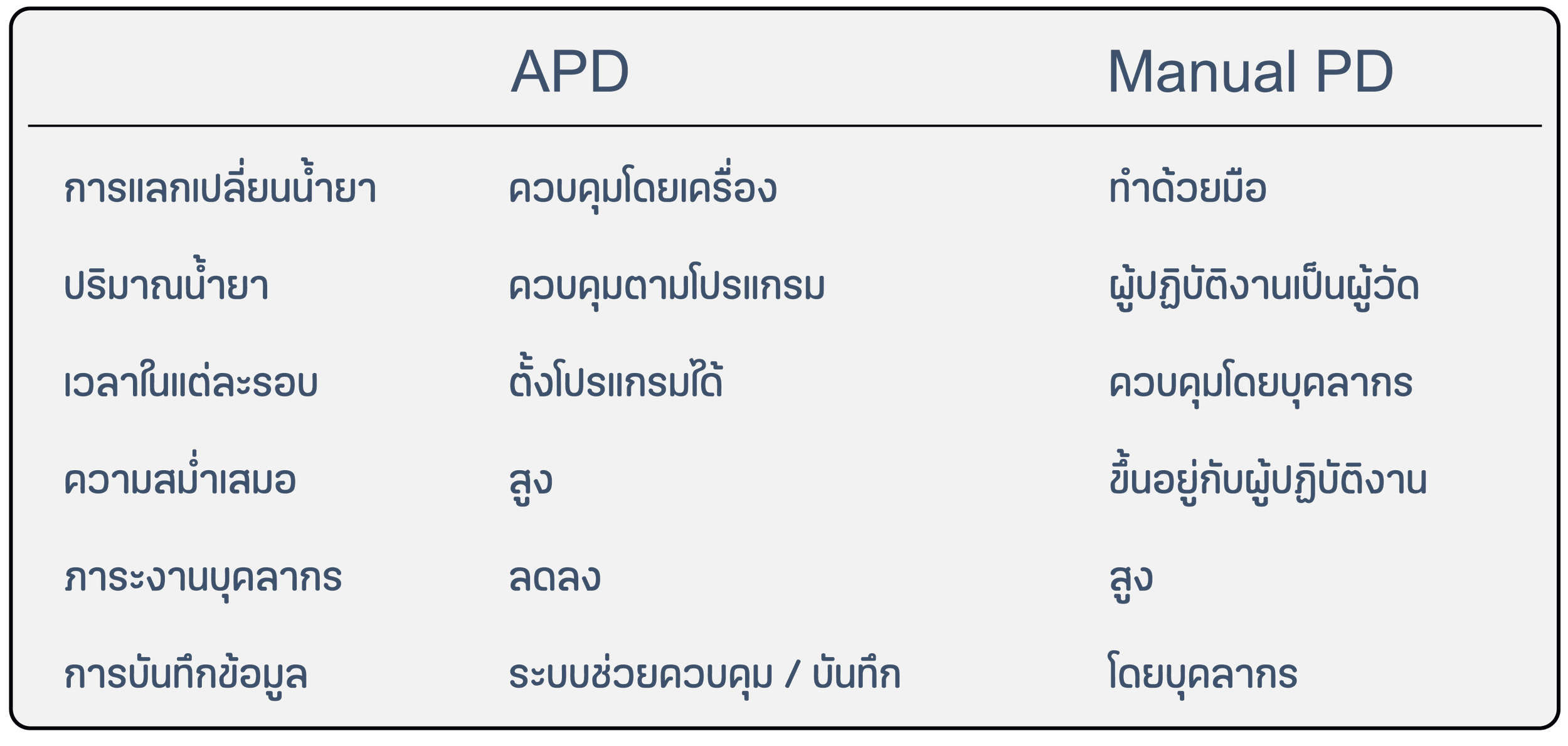
• APD (Automated Peritoneal Dialysis) คือการล้างไตทางช่องท้องแบบอัตโนมัติ โดยใช้เครื่องควบคุมกระบวนการแลกเปลี่ยนน้ำยาตามโปรแกรมที่กำหนด ช่วยควบคุมปริมาณของเหลวและระยะเวลาในแต่ละรอบได้อย่างเป็นระบบ ลดขั้นตอนที่ต้องทำด้วยมือ และช่วยให้การรักษามีความสม่ำเสมอมากขึ้น
2. APD แตกต่างจาก Manual PD อย่างไร?
• ความแตกต่างหลักอยู่ที่ระดับของการควบคุมและการทำงานอัตโนมัติ
3. สัตว์ที่เป็นโรคไตทุกตัวจำเป็นต้องล้างไตหรือไม่?
• ไม่ สัตว์ที่เป็นโรคไตไม่ได้จำเป็นต้องล้างไตทุกตัว การล้างไตเป็นการรักษาที่ใช้ในบางสถานการณ์ โดยสัตวแพทย์จะประเมินจากสาเหตุและความรุนแรงของโรค การทำงานของไต ปริมาณปัสสาวะ ภาวะสมดุลของน้ำและเกลือแร่ รวมถึงการตอบสนองต่อการรักษาอื่นๆ
4. กรณีใดที่สัตวแพทย์อาจพิจารณาการล้างไต?
• สัตวแพทย์อาจพิจารณาการบำบัดทดแทนไตในสัตว์บางกรณี เช่น
- ภาวะไตวายเฉียบพลัน (AKI) ที่รุนแรง
-มีปัสสาวะน้อยมากหรือไม่ปัสสาวะ
-มีภาวะน้ำเกินที่ไม่สามารถควบคุมได้ด้วยการรักษาทั่วไป
-มีความผิดปกติของเกลือแร่หรือกรด–ด่างที่รุนแรง
-ได้รับสารพิษบางชนิดที่สามารถกำจัดออกด้วยการบำบัดทดแทนไต
-ภาวะไตวายเฉียบพลันร่วมกับโรคไตเรื้อรังในผู้ป่วยบางราย
ทั้งนี้ การตัดสินใจต้องอยู่ภายใต้การประเมินของสัตวแพทย์
5. แมวหรือสุนัขขนาดเล็กสามารถล้างไตทางช่องท้องได้หรือไม่?
• ได้ ในบางกรณี Peritoneal Dialysis เป็นทางเลือกที่สัตวแพทย์อาจพิจารณาสำหรับสัตว์ขนาดเล็ก โดยเฉพาะเมื่อการบำบัดทดแทนไตด้วยวิธีอื่นไม่เหมาะสมหรือไม่สามารถทำได้
Clinical information about Peritoneal Dialysis, APD, patient management, and veterinary practice.
1. What is Automated Peritoneal Dialysis (APD)?
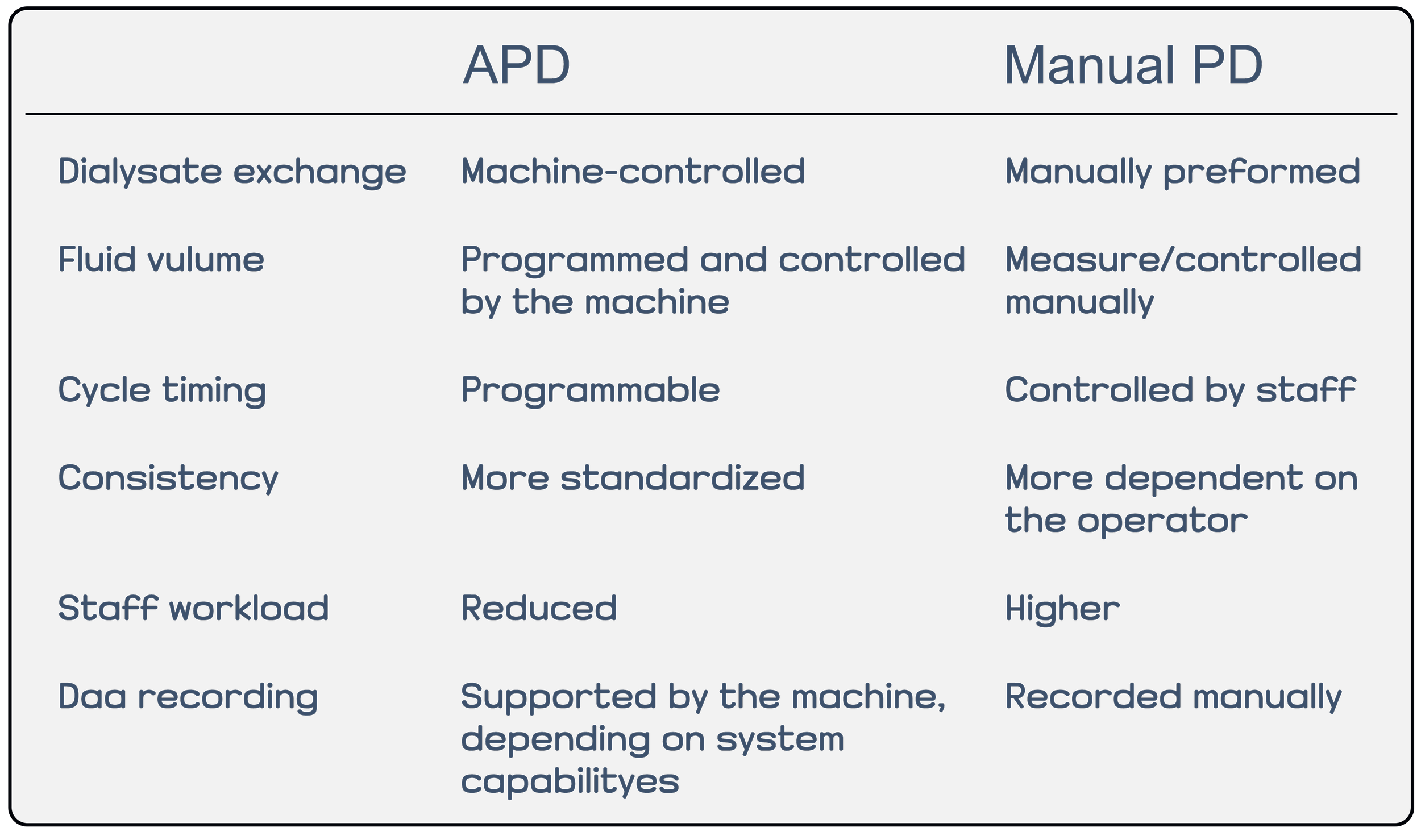
• Automated Peritoneal Dialysis (APD) is an automated form of peritoneal dialysis in which a machine controls the exchange of dialysate according to a programmed treatment protocol. It provides systematic control of fluid volume and cycle timing, reduces manual procedures, and supports greater consistency throughout treatment.
2. How is APD different from Manual Peritoneal Dialysis?
• The main difference is the level of automation and control.
3. Does every pet with kidney disease need dialysis?
• No. Not every dog or cat with kidney disease needs dialysis. Renal replacement therapy is considered only in selected situations. Veterinarians evaluate factors such as the underlying cause and severity of kidney dysfunction, urine production, fluid and electrolyte balance, and the patient's response to conventional treatment.
4. When might a veterinarian consider Peritoneal Dialysis?
• A veterinarian may consider renal replacement therapy in selected cases, such as:
- Severe Acute Kidney Injury (AKI)
- Severe oliguria or anuria
- Fluid overload that cannot be adequately controlled with conventional treatment
- Severe electrolyte or acid–base disturbances
- Certain toxin exposures
- Acute-on-chronic kidney injury in selected patients
The decision should always be based on an individual veterinary assessment.
5. Can small dogs and cats undergo Peritoneal Dialysis?
• Yes. In selected cases, Peritoneal Dialysis may be considered for small dogs and cats, particularly when other forms of renal replacement therapy are not suitable or available.